
Welcome to the latest edition of the Lawson Unit Newsletter. Created by members of our Patient Panel and edited by David and Nigel, this newsletter is very much by patients, for patients. Within these pages you’ll find stories, reflections, information, and ideas drawn from the experiences of people who use our service. We are immensely proud to support a publication that is led by patients and shaped by the diverse voices of our community. As this newsletter continues to grow, it stands as a testament to the power of partnership, shared experience, and the strong sense of community that exists within the Lawson Unit.
Your appointment starts before you arrive
Have you ever left a clinic appointment wishing you’d mentioned something? Perhaps a worry, a symptom, difficulties sleeping, feeling anxious, struggling at work, or changes in how you feel about yourself or your relationships. Sometimes important things simply don’t come up in the moment.
PROMS (Patient Reported Outcome Measures): here’s how it works…
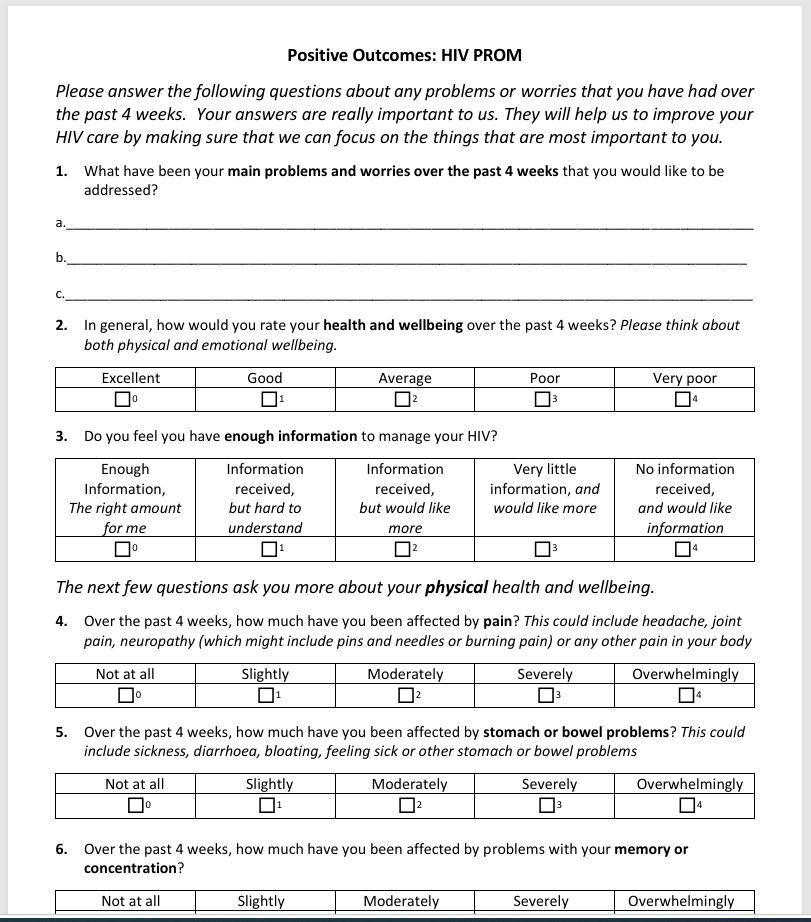
When you arrive for your appointment, the receptionist will give you a short paper form to complete while you wait. It’s called the Positive Outcomes Form, developed specifically for people living with HIV and co-designed with patients by BHIVA (the British HIV Association).
At the beginning of the form, there’s space for you to write down any concerns or issues you’d like to discuss with your clinician, helping to make sure nothing gets forgotten or left unsaid. The rest of the form asks about things such as sleep, energy levels, mood, relationships, and anything else that may be affecting your day-to-day life.
Once you’ve completed it, simply hand it to your doctor at the start of your appointment. They can then use it to guide the conversation and ensure that the things that matter most to you are front and centre. After your appointment, the form is added to your medical record and becomes part of your ongoing care.
This is not a research questionnaire. It’s simply a way of helping you get the most from your appointment.
Where are we now?
We’re starting gradually. For now, the forms are available in clinics running on Mondays and Fridays, but we hope to introduce them across all clinics soon so that they become a routine part of care for everyone. We’re also working towards making the form available electronically in the future, but one step at a time!
Why does this matter?
Good HIV care has always been about more than viral loads and blood tests. It’s about you as a whole person.
This form is part of our commitment to genuinely patient-centred care, where your priorities help shape the appointment. It also gives you the opportunity to raise issues that can sometimes be difficult to discuss face to face, or that might otherwise be forgotten when time is limited.
Having the form in front of you before the appointment puts you in the driving seat. You decide what’s important to talk about, helping to ensure that nothing slips through the cracks.
If you have any questions about the Positive Outcomes Form, please ask a member of staff at your next appointment.
Notes from the recent Lawson Unit Patient Panel meeting
The last Patient Panel meeting was held on 25th September in Dorset Gardens Methodist Church and the Patient Panel attendees were able to take the opportunity to have a full lunchtime meal and meet other people living with HIV at the excellent Lunch Positive.
As is usual for Patient Panel meetings, there were guest speakers; this time the Speakers were Dr Sonia Raffe, clinical lead at The Lawson Unit, and Justine Orme, our Senior Sexual Health Advisor.
Dr Sonia said:
“It was an absolute honour to come and talk to the patient panel In September. We had a great turnout and it was lovely to see both familiar and new faces. Thank you so much to the wonderful Lunch Positive team for hosting and for the very tasty food! I discussed the priorities set out in the HIV Action Plan for England, with a particular focus on thriving and collaborating. We had an interesting discussion about what it means to thrive with HIV, particularly into older age and when people have other complex health and care needs. It was really helpful to hear what role the Lawson Unit can play in supporting healthy ageing and how we can work collaboratively with service users, primary care and the voluntary sector. It was really powerful to hear about some of the barriers many still face in accessing care and think about how we can work towards overcoming these. Thanks to everyone who came and I’d love to come back again in the future.”
Justine said:
“I recently had the pleasure of chatting with the patient panel after enjoying a lovely lunch from the wonderful Lunch Positive. I wanted to chat about sex – not always the easiest topic on a Friday afternoon!
Sexual health is a key part of overall wellbeing for people living with HIV. It’s about much more than just preventing or managing STIs; it includes sexual function, intimacy, relationships, pleasure, fertility, body image and emotional health.
Even though we’re now in the U=U era (undetectable = untransmittable) thanks to brilliant treatments, many people living with HIV still have worries. These might include concerns about disclosure, fear of transmission, stigma, changes in sex drive, erection difficulties, vaginal symptoms, menopause, fertility or how HIV affects relationships.
Talking about sexual health as part of routine care can really help – boosting mental health, treatment adherence, relationship satisfaction and general wellbeing. Even so, it can feel tricky to bring up sex with your healthcare team. These conversations are a normal part of care for everyone, but it’s vital that patients feel relaxed and not judged.”
Attendees were happy to share their experiences, and some helpful points came up: asking permission before sensitive questions; avoiding assumptions; using gender-neutral language; and phrasing questions gently. For example, asking “Do you have any concerns about sex, intimacy or relationships that you’d like to discuss?” can help create a safe space where people feel confident to speak up.
The Lawson Unit Patient Panel is welcoming and open to all patients. The Patient Panel offers a space for providing feedback, mutual support, and learning. To see what’s going on or for more details visit our dedicated Lawson Unit Patient Panel page.
Clinical Research News
Research has been the bedrock of innovation that has ensured the incredible improvements in treatment for people living with HIV since the 1990s and we are excited that we have been part of that. Thank you so much to all those who have joined studies and helped support increasing our knowledge and improving care.
One of the issues with less frequent Lawson Unit clinic visits is finding the right patients wanting to hear about new studies we are doing.
If you would like to be contacted about potentially joining studies please email us: [email protected] (include your name, date of birth, best way to contact you and particular study interests if you have any) and we can let you know if/when a suitable study comes up.
Research continues to be a particularly exciting area of our work, with several cutting-edge studies underway. We have recently started enrolling participants into Daybreak-2, a study evaluating six-monthly injectable HIV treatment, and HABI-LP, which is exploring the safe transition of people with cognitive impairment to dual therapies. We are also continuing follow-up of participants enrolled in Purpose-5, investigating six-monthly HIV prevention injections, and Islend-1 and Islend-2, which are assessing novel weekly oral HIV treatments. These studies are helping to shape the future of HIV care, with new therapies such as Idvynso and Bixlenvo progressing towards clinical use. In addition, we are involved in a number of sexual health research projects and have recently opened our first contraception drug study.
Next year, we start another exciting study comparing a weekly oral tablet vs standard daily tablets in people living with HIV. Email us if you are interested: [email protected]
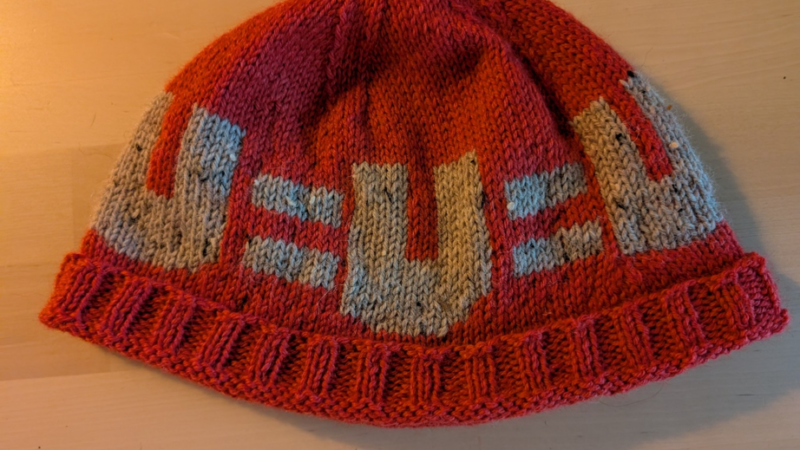
Knit your own U=U hat
Throughout history, textiles and fibre arts have been closely tied to social identity, culture, and political expression. The clothes we wear and the items we make help communicate who we are and what we stand for. At key moments in history, crafting has also become a form of resistance. One example is the iconic red Norwegian protest hat worn during the Second World War as a symbol of anti-Nazi resistance. More recently, the “Melt the ICE” hat reimagined the traditional red pointed hat as a protest against US Immigration and Customs Enforcement (ICE) operations, gaining widespread attention online and becoming a viral symbol of activism.
These examples are part of a movement known as craftivism, where craft is used to promote activism, solidarity, remembrance, and social change. Craftivism highlights how activities often dismissed as traditional or “grandmotherly” hobbies can be powerful tools for self-expression and protest. Such stereotypes have frequently been rooted in misogynistic attitudes that undervalue the cultural and political significance of these creative practices. Learn more about Craftivism.
Perhaps the most significant example of craftivism is the AIDS Memorial Quilt. The quilt is a collection of individual panels made from fabric, photographs, embroidery, and other materials, each commemorating someone lost to AIDS. It was established in the United States during the 1980s by Cleve Jones and has become one of the largest community arts projects in the world. Read about Cleve Jones.
More recent HIV-related examples include the U=U T-shirt project created by Angelina Namiba, which uses craft and design to raise awareness of the Undetectable = Untransmittable message. Learn about Angelina Namiba’s U=U awareness work.
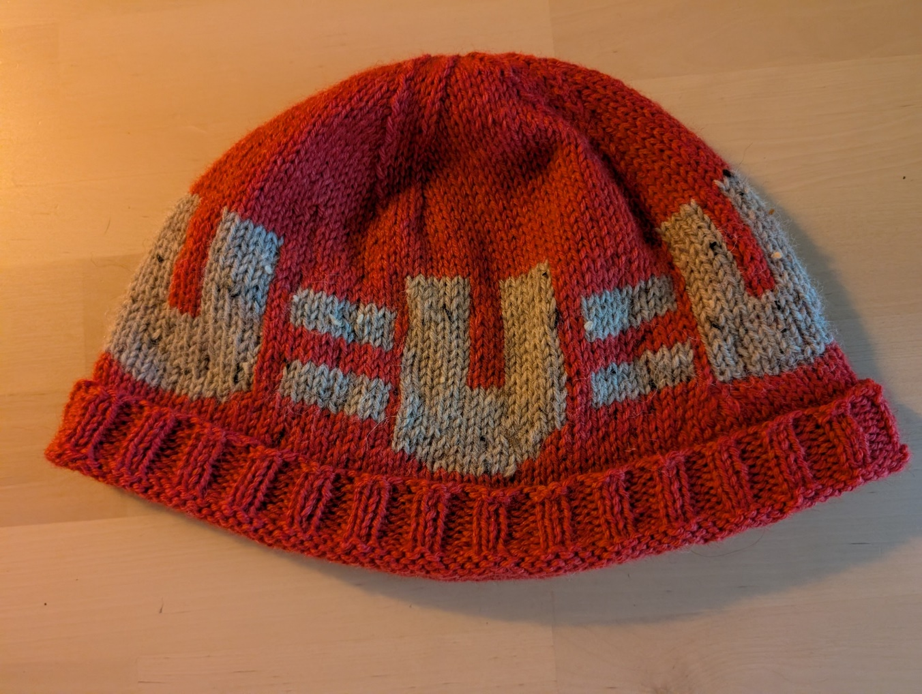
Art and craft continually build upon the ideas and creations that come before them. My own preferred medium is knitting and other fibre arts, which inspired me to create the U=U hat. I hope you’ll feel encouraged to give it a try yourself or, even better, create your own piece of craftivism and use creativity as a way to share a message that matters to you.
The U=U hat
– designed by Lena Paul, HIV Clinical Nurse Specialist @ Lawson Unit
Begin with 4mm circular knitting needles. Using DK weight yarn – you’ll need a main colour and later a contrast colour.
Cast on 120 stitches using a stretchy cast-on method.
Begin working the stitches in the round. Work the stitches knit then purl. This will create the ribbing effect for the brim. Continue until your desired brim length.
Now work just knit stitches, to the same depth as the brim. Use 5 markers, dividing your every 24 stitches, so the 5 marks are spread evenly in the round.
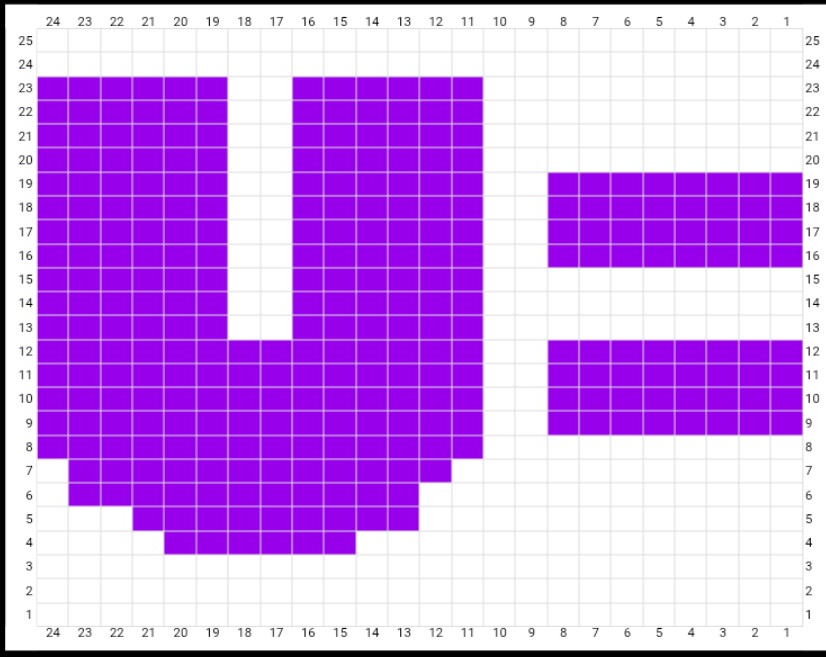
Begin the colour work chart, using your contrast colour and main colour.
After you have completed the colour work chart. Begin working your hat decreases.
Round 1. Knit to the last 3 stitches before each stitch marker, knit 2 together. Slip the stitch marker, knit 1 and then slip-slip-knit. (10 decreases done)
Round 2 knit all stitches.
Continue rounds 1 and 2, until you have 10 stitches left; bind off your stitches and, with the last bit of broken yarn, sew this closed. Tadaa! You’ve finished your hat.
Feedback for Pharm@Sea
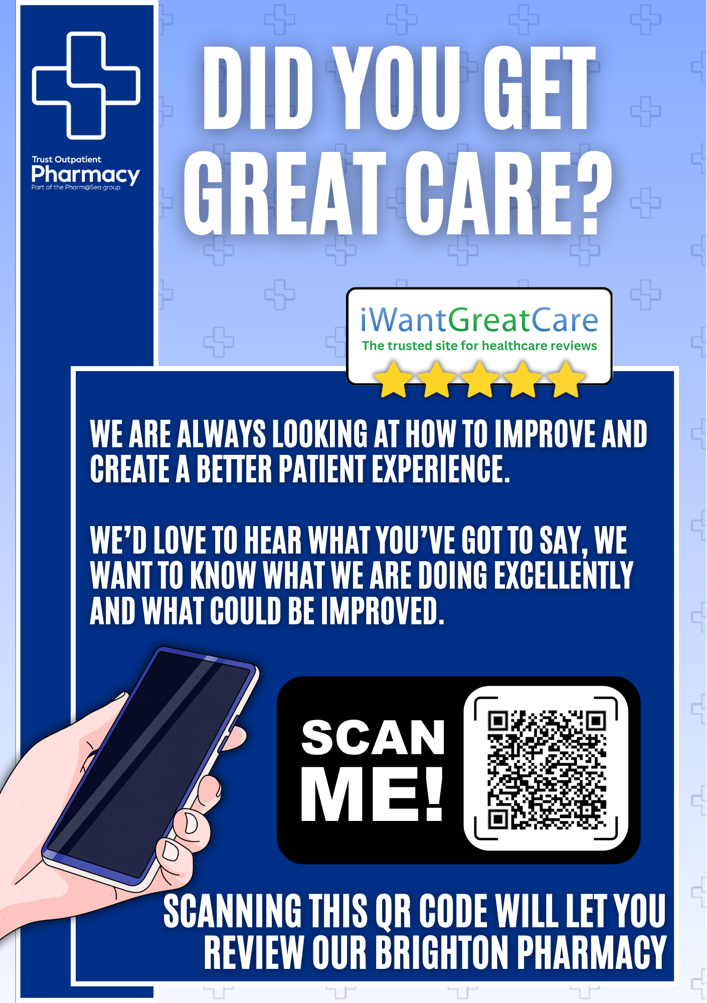
Pharm@Sea are looking at how to improve and create a better patient experience.
They would love to hear what you’ve got to say; what are they doing well and what could be improved. This is your opportunity to provide some anonymous feedback.
Scan the QR code or leave a review on iWantGreatCare.
News from the GREEN TEAM!
Did you know that empty HIV medication bottles, along with their cardboard packaging and information leaflets, can be recycled through your household recycling collection?
By recycling where possible, you can help support the NHS ambition to become the world’s first net zero national health service, with a target of reaching net zero carbon emissions by 2040.
Many blister packs can also be recycled through pharmacy recycling schemes. Local pharmacies, including some Superdrug branches, offer collection points for used medicine blister packs.
Every small action helps reduce waste and supports a greener NHS.