
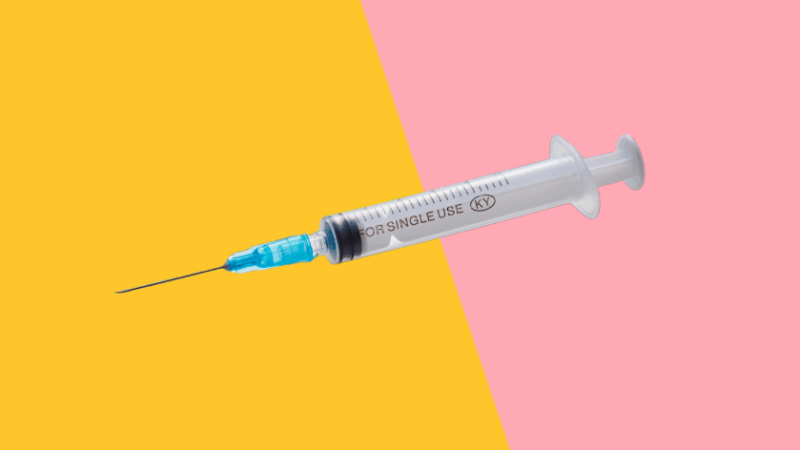
What is a contraceptive injection?
The injection is a form of long-acting reversible contraception (LARC). In the UK the main types of injections are Depo-Provera, sometimes referred to as “the depo”, and Sayana Press. They work in the same way.
The depo is delivered through injections, usually into your bottom, every 12-13 weeks. It only contains progesterone which means that if contraception containing oestrogen (such as the combined pill) isn’t an option for you, the injection may still be safe.
How does the contraceptive injection work?
The injection contains a hormone called progestogen which is very similar to the body’s own hormones. It stops the body from releasing an egg, thickens the mucus around the neck of the womb which makes it harder for sperm to get through, and thins the womb lining so a fertilised egg is less likely to develop.
Who can have the contraceptive injection?
The contraceptive injection is available for women and people assigned female at birth (AFAB) who meet the eligibility criteria.
Who can’t have the contraceptive injection?
The contraceptive injection is a good choice for some people, but there are also some reasons that the contraceptive injection may not be suitable. Examples of this include people with a history of heart problems, diabetes, breast cancer, blood clots or osteoporosis. Your health history will be discussed with you prior to starting the injection to make sure it’s the right fit.
How effective is a contraceptive injection?
It is more than 99% effective at preventing pregnancy if used correctly.
How can I get the contraceptive injection?
You will need to book an appointment to start the contraceptive injection by calling 01273 523 388. We may need to do some checks prior to starting, including a pregnancy test if there is a chance you may be pregnant. Prior to giving it, you will have a chat with a doctor or nurse to discuss whether you are eligible for the injection, how to take it, and the risks involved.
Phone line opening times
Phone lines are closed on Bank Holidays.
- Monday:
- 9.15am to 4.30pm
- Tuesday:
- 9.15am to 4.30pm
- Wednesday:
- 12.30pm to 4.30pm
- Thursday:
- 9.15am to 4.30pm
- Friday:
- 9.15am to 4.30pm
How is the contraceptive injection given?
In clinic the contraceptive injection is given through an injection into the outer muscle of your bottom or thigh.
If it’s given during the first 5 days of your cycle (from when your period starts) it will start working straight away. If given at another time of the month it will still work, but you’ll need to use extra contraception such as condoms for the first 7 days. It is then repeated every 12-13 weeks.
If you are happy with the injection as a form of contraception, and able to learn how to inject yourself just under the skin, we can teach you how to use Sayana Press. The advantage is we can provide you with 1 years supply (3 injections to go home with) meaning you only need to come to the clinic annually.
What should you do if you miss an injection?
If you do not have an injection after 14 weeks then you are no longer protected against pregnancy. If you forget to have your injection, use alternative contraception such as condoms, and talk to your doctor or nurse as soon as possible.
What are the common side effects?
Bleeding
The contraceptive injection affects people’s periods differently. Some people notice their periods are heavier and irregular after the first injection, but this usually gets better after the second dose. If you’re struggling in the first few weeks, get in touch as there are ways we can help. With longer term use periods usually become shorter, lighter, less painful and often stop altogether. It can take a few months after stopping the injection for your periods to return to normal.
Weight Changes
Some people experience weight gain when using the contraceptive injection, often through increased appetite. This can be managed with a healthy diet and regular exercise. Weight gain is usually minimal, but in some people it can be up to 2.5kg in the first year.
Osteoporosis
The contraceptive injection can temporarily cause a small decrease in bone mineral density, which usually recovers when you stop having the injections. To help prevent this we recommend regular exercise and eating lots of calcium-containing foods such as dairy and leafy greens. After 2 years of injections your doctor or nurse will discuss the risks and benefits of continuing this method.
Other side effects
Other reported side effects of the injection include:
- Headaches
- Stomach pains
- Feeling bloated or sick
- Lower sex drive
- Breast tenderness
- Feeling tired or weak
- Changes to mood
- Feeling dizzy
- Itching
- Acne
- Hair loss
- Fluid retention