
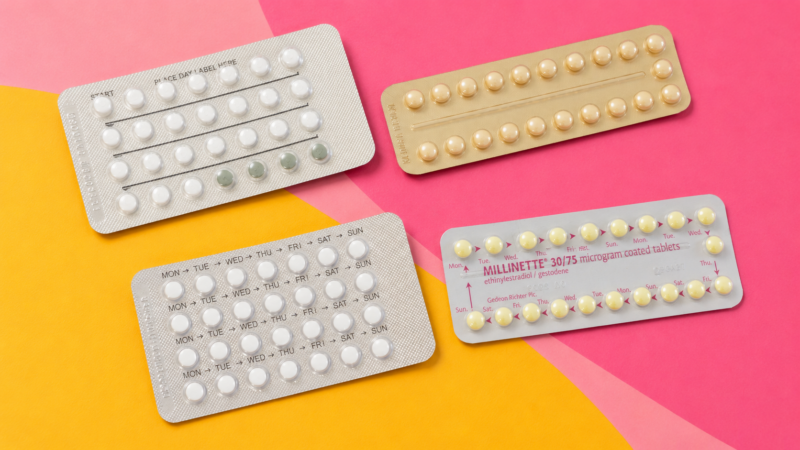
What are contraceptive pills?
Contraceptive pills contain hormones that help prevent pregnancy and are taken every day. The two main types are the combined pill and the progestogen-only pill.
Combined pill (COCP)
COCP stands for combined oral contraceptive pill. It is usually known as the combined pill or simply “the pill”.
It’s called the combined pill because it combines two hormones: oestrogen and progestogen. It mainly works by stopping the ovaries releasing an egg each month (ovulation). It also thickens the mucus at the entrance to the womb, making it harder for sperm to reach an egg.
There are many different brands of combined pill, containing slightly different hormones and doses.
Progestogen-only pill (POP or mini pill)
POP stands for progestogen-only pill and is sometimes called the “mini pill”. It contains one hormone, progestogen.
Most POPs work by thickening the mucus at the entrance to the womb, making it harder for sperm to reach an egg. Some also stop ovulation, depending on the type of POP.
There are different types of POP, including desogestrel, drospirenone and traditional POPs containing norethisterone or levonorgestrel. They have different instructions about when to take them and what counts as a late or missed pill.
How effective is the contraceptive pill?
Both the combined pill and the progestogen-only pill are highly effective methods of contraception when they are taken correctly.
Perfect use
If the pill is taken exactly as instructed every day, fewer than 1 in 100 people using it will become pregnant during a year.
Typical use
In real life, pills are sometimes forgotten or taken late.
With typical use, around 9 in every 100 people using the pill will become pregnant over one year.
How to make the pill as effective as possible
The pill is most effective when it is taken correctly every day. Missing pills or taking them late can reduce how well it works.
You can help make your pill as effective as possible by:
- taking it at the same time every day
- setting a daily reminder or phone alarm
- starting each new packet on time
- following missed pill advice if you forget a pill
- checking with a healthcare professional before taking new medicines
- using condoms if you are advised to after missing pills
- attending regular pill reviews.
If remembering to take a pill every day feels difficult, you may prefer a long-acting reversible contraceptive (LARC) such as the contraceptive implant, hormonal coil or copper coil. These methods are over 99% effective and work continuously without needing to remember a daily pill.
Is the contraceptive pill right for me?
During your appointment, a healthcare professional will ask about your health and discuss the different options with you to help you choose the method that best meets your needs.
Both types of pill are highly effective when used correctly, but one may be more suitable than the other depending on your health, age, lifestyle and personal preferences.
There isn’t a “best” pill that suits everyone. If one type isn’t suitable, we can discuss other hormonal and non-hormonal methods of contraception with you.
Choosing the combined pill (COCP)
The combined pill may be suitable if you want a contraceptive method that you control yourself and can remember to take every day.
It may also be a good option if you:
- prefer regular, predictable monthly bleeding
- have heavy, painful or irregular periods
- experience symptoms of premenstrual syndrome (PMS)
- have acne that may improve with certain combined pills.
Because the combined pill contains oestrogen, it is not suitable for everyone. You may be advised not to use it if you:
- have migraine with aura
- have previously had a blood clot in your leg or lungs
- have certain heart or circulation conditions
- have uncontrolled high blood pressure
- have certain liver conditions
- smoke and are aged 35 or over
- have certain types of breast cancer
- are within the first few weeks after giving birth.
Before prescribing the combined pill, a healthcare professional will ask about your medical history, check your blood pressure and discuss any medicines you take to make sure it is safe and suitable for you.
Choosing the progestogen-only pill (POP)
The progestogen-only pill is suitable for most people and can often be used by those who cannot take the combined pill.
It may be recommended if you:
- are breastfeeding
- smoke and are aged 35 or over
- have migraine with aura
- have a higher risk of blood clots
- cannot take medicines containing oestrogen
- prefer a pill that does not contain oestrogen.
Before prescribing a progestogen-only pill, a healthcare professional will ask about your medical history and any medicines you take to make sure it is safe and suitable for you. The exact advice may depend on the type of POP you are prescribed.
How can I get free contraceptive pills in Brighton and Hove?
The contraceptive pill is available free of charge from any of our clinics, many GP surgeries and some community pharmacies. During your appointment, we’ll ask about your health, answer any questions you have and help you choose the method that’s right for you.
Whether you’ve already decided which pill you’d like or want help choosing between the different options, we can talk you through the choices and answer any questions you have.
See how to book a contraception appointment for booking details and phone line opening times.
Some community pharmacies can provide both the combined pill (COCP) and the progestogen-only pill (POP) free of charge through the NHS Pharmacy Contraception Service, without the need for a prescription. Find a pharmacy that offers the contraceptive pill without a prescription.
Getting repeat supplies
Once you have started taking the pill and it remains suitable for you, you can usually get a repeat prescription from Brighton SHAC, your GP surgery or participating community pharmacies without needing a full contraception consultation each time. From time to time, you will be asked to have a pill review to make sure your pill is still safe and suitable for you.
Taking the contraceptive pill after having a baby
Your fertility can return surprisingly quickly after pregnancy, even if your periods have not started again.
The type of pill you can use after having a baby depends on:
- whether you are breastfeeding
- how many weeks ago you gave birth
- your medical history
- whether you have any additional risk factors for blood clots.
Many people can start the progestogen-only pill immediately after giving birth, while the combined pill usually needs to be started later because of the increased risk of blood clots in the weeks after pregnancy.
If you are breastfeeding, the progestogen-only pill is usually suitable. The combined pill may be started later and may affect milk supply in some people.
For detailed guidance about contraception after pregnancy, including breastfeeding and when different methods can be started, see our contraception after pregnancy page.
Frequently asked questions (FAQs) about contraceptive pills