
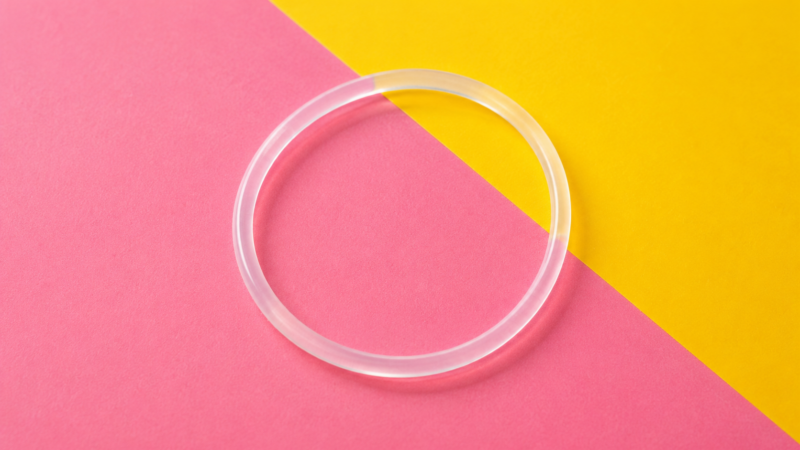
What is the vaginal ring?
The vaginal ring is a soft, flexible plastic ring around 5cm across. You insert it yourself and usually leave it in place for 21 days. The hormones are absorbed through the vaginal wall and mainly work by stopping your ovaries from releasing an egg (ovulation).
How can I get the vaginal ring in Brighton and Hove?
The vaginal ring is free on the NHS. See how to book a contraception appointment to get the vaginal ring from Brighton SHAC.
At your appointment, a clinician will talk with you about your medical history, any medicines you take and the contraception you have used before. This helps us check that the ring is safe and suitable for you. If it is not suitable, we can talk through other options and help you find a method that works for you.
You may also be able to get the vaginal ring from your GP.
Is the vaginal ring right for me?
The vaginal ring may be a good option if you want a method that you do not need to remember every day and you are comfortable inserting and removing it yourself. Because it contains oestrogen, it is not suitable for everyone.
The vaginal ring may not be suitable if you:
- are aged 35 or over and smoke
- have migraine with aura
- have had a blood clot, stroke, or certain heart or circulation problems
- have high blood pressure
- have or have had breast cancer
- have certain liver or gallbladder conditions
- have complications from diabetes
- have recently had a baby or are breastfeeding.
A clinician will check your medical history, blood pressure and any medicines you take before prescribing the vaginal ring.
Advantages of the vaginal ring:
- You do not need to remember contraception every day; the ring stays in place for 21 days in standard use
- Vomiting or diarrhoea does not affect how well the ring works because the hormones are absorbed through the vaginal wall rather than your stomach
- It is reversible. Fertility usually returns quickly after stopping, and your menstrual cycle typically returns to its previous pattern within 1-3 months
- It can make periods more regular, lighter and less painful
- It may improve premenstrual symptoms (PMS) and acne in some people
- It does not usually interrupt sex. You or your partner may occasionally feel the ring, but this is not harmful
- Combined hormonal contraception is associated with a reduced risk of ovarian, womb (uterine) and bowel cancer.
Disadvantages of the vaginal ring:
- The ring contains oestrogen and progestogen, so it is not suitable for everyone. A clinician will check if it is safe for you
- It does not protect against sexually transmitted infections (STIs). Condoms are needed to reduce the risk of STIs
- It must be inserted and replaced at the correct times to be as effective as possible
- You need to be comfortable inserting and removing the ring yourself
- The ring can occasionally come out, for example during or after sex or when straining to open your bowels
- There is a small increased risk of blood clots with combined hormonal contraception. Your clinician will assess your individual risk before prescribing.
When can I start using the vaginal ring?
You can start the vaginal ring at any time in your menstrual cycle.
- If you start on day 1–5 of your period, you are protected from pregnancy straight away
- If you start at any other time, you will need to use condoms (or avoid sex) for the first 7 days.
If you are switching from another hormonal method of contraception, the advice about when to start the ring may be different. A clinician can tell you whether you need to use condoms for a short time after switching.
If there is any chance you could be pregnant, speak to a clinician before starting.
How do I use the vaginal ring?
Standard use usually follows a 4-week cycle:
- With clean hands, squeeze the ring between your thumb and finger and gently push it into your vagina until it feels comfortable. There is no exact position it needs to sit in
- Leave the ring in place for 21 days (3 weeks). You should not usually be able to feel it once it is comfortably in place
- After 21 days, hook a finger around the edge of the ring and gently pull it out
- Put the used ring back in its pouch and throw it in the household bin. Do not flush it down the toilet
- Have a 7-day ring-free break. You are still protected from pregnancy during this break if you have used the ring correctly. Most people have a bleed, sometimes called a withdrawal bleed
- After the 7-day break, insert a new ring and repeat the cycle.
Can I use the vaginal ring without having a break every month?
Yes. You do not have to have a 7-day ring-free break every month. Some people choose to use the vaginal ring in a different way, for example by:
- having a shorter 4-day break
- using rings continuously without a break
- using rings for several weeks before having a short break.
Using the ring in these ways can mean fewer withdrawal bleeds and may help with symptoms that happen during the ring-free break, such as headaches or mood changes.
You still need to replace each ring every 21 days. A clinician can talk through the different options with you and help you choose a way of using the ring that suits you.
Can I have sex or use tampons with the vaginal ring in?
Yes. You can have sex and use tampons while the vaginal ring is in place. You or your partner may occasionally feel the ring during sex, but this is not harmful and does not affect how it works.
The ring does not need to be removed during sex. If you choose to remove it, do not leave it out for more than 3 hours.
How effective is the vaginal ring?
The vaginal ring is very effective at preventing pregnancy, but how well it works depends on how it is used.
Perfect use:
With perfect use, the vaginal ring is more than 99% effective. This means fewer than 1 in 100 people will become pregnant in a year.
Typical use:
With typical use, the vaginal ring is around 91% effective. This means around 9 in 100 people may become pregnant in a year.
Typical use includes forgetting to insert a new ring on time or the ring being out for longer than recommended.
If you are unsure whether your vaginal ring has worked properly, contact SHAC as soon as possible for advice about whether you need additional contraception.
What should I do if there is a problem with my vaginal ring?
What should I do if my vaginal ring comes out or has been removed or not replaced on time? (unscheduled ring removal)
If the ring has been out for less than 48 hours in week 1 after the ring free interval:
- Emergency contraception is not required (if correctly used earlier in week 1 and the 7 days prior to the ring free interval)
- Insert a ring as soon as possible and keep ring in until scheduled ring removal day
- No additional contraceptive precautions required (if correctly used earlier in week 1 and the 7 days prior to the ring free interval).
If the ring has been out for less than 48 hours in weeks 2 or 3 after the ring free interval:
- Emergency contraception is not required (if correct use in the previous 7 days)
- Insert ring as soon as possible and ring in until scheduled removal day
- No additional contraception is required (if correct use in previous 7 days).
If the ring has been out for more than 48 hours in week one after the ring free interval:
- You may need emergency contraception if you have had condomless sex in the ring free interval or week 1 (contact Brighton SHAC or your GP for advice)
- Insert ring as soon as possible and keep ring in until scheduled ring removal day. Condoms should be used or sex avoided until new ring has been used for 7 consecutive days
- You may need a follow up pregnancy test.
If the ring has been out for more than 48 hours in weeks 2 or 3 after ring free interval:
- Emergency contraception is not required if ring used correctly in the previous 7 days
- Insert ring as soon as possible and ring in until scheduled ring removal day
- If the unscheduled ring removal happened in the week prior to the ring free interval, then omit the ring free interval
- Condoms should be used or sex avoided until new ring has been used for 7 consecutive days.
What should I do if I forget to take my vaginal ring out?
If you have used the same ring for more than 21 days and less than 28 days:
- emergency contraception is not required as long as it was correctly used from day 21 to day 28
- You should start the ring free break if scheduled OR insert a new ring
- No additional contraception is required if the ring was consistently in from day 21 to day 28
If you have used the same ring for more than 4 weeks and less than 5:
- Emergency contraception is not required if the ring was used correctly for the last 7 days
- You should omit the ring free week and insert a new ring as soon as possible
- Condoms should be used or sex avoided for the next 7 days.
If you have used the same ring for more than 5 weeks:
- You may need emergency contraception if condomless sex has taken place during week 5 or later and you should contact Brighton SHAC or your GP for advice
- You should omit the ring free interval and insert a new ring as soon as possible and use condoms or avoid sex for the next 7 days.
What should I do if I forget to put a new vaginal ring in after the break?
If it is more than 8 days since the ring was removed for your scheduled break:
- You might need emergency contraception if you have had condomless sex during or after the ring free interval. Contact Brighton SHAC or your GP for advice
- Insert a new ring and keep it in until scheduled removal day
- Use condoms or avoid sex for the next 7 days
- A follow up pregnancy test may be needed.
What should I do if I cannot find or remove my vaginal ring?
The vaginal ring cannot get lost inside your body because the cervix prevents it from travelling beyond the vagina. If you cannot feel the ring with your fingers but you are sure it is still inside, contact Brighton SHAC or your GP for advice.
If you can feel the ring but cannot remove it, or you have pain or bleeding when trying to remove it, contact Brighton SHAC or your GP as soon as possible.
Can medicines and herbal remedies affect the vaginal ring?
Yes. Some medicines and herbal remedies can affect how well the vaginal ring works or interact with the hormones it contains. This includes some medicines used to treat epilepsy, tuberculosis (TB) or HIV, and St John’s wort.
Tell a doctor, nurse or pharmacist that you use the vaginal ring before starting any new medicine or herbal remedy. They can advise whether you need additional contraception or a different contraceptive method.
What side effects and risks can the vaginal ring cause?
Weight gain
There is no evidence that using the vaginal ring causes weight gain.
Common side effects
Changes to your bleeding pattern, including breakthrough bleeding or spotting, are common in the first few months of using the ring.
Some people also report headaches, feeling sick, sore breasts or mood changes. Some people notice increased vaginal discharge or irritation. There is not enough evidence to say whether all of these symptoms are caused by the ring.
If side effects are still causing you problems after around 3 months, contact your GP or Brighton SHAC. Trying a different method of contraception may help.
Less common but more serious risks
Serious side effects are uncommon. However, combined hormonal contraception can slightly increase the risk of:
- Raised blood pressure
- Blood clots (affecting up to 1 in 1,000 people using combined hormonal contraception)
- Breast and cervical cancer (a small increased risk while using it, which returns to normal around 10 years after stopping)
Your clinician will assess your medical history and individual risk factors before prescribing the ring for you.
Your blood pressure will be checked before you start and monitored while you are using the method.
If you develop severe chest pain, shortness of breath, severe leg pain or swelling, sudden vision problems, or a severe headache unlike your usual headaches, seek urgent medical advice.